GS Paper 3

Mump Diseases

Context: Mumps cases have been spreading rapidly in Kerala since November 2023, particularly in the districts of Malappuram, Kozhikode, Palakkad, and Thrissur, resulting in major community outbreaks.

About Mumps Disease

  • It is a viral disease caused by mumps virus, which belongs to the paramyxovirus family. 
  • It is highly contagious and spreads through respiratory droplets or direct contact with an infected person. 
  • The disease is known for causing painful swelling of the salivary glands, particularly the parotid glands located near the ears.
  • Mumps is a self-limiting, airborne viral disease that primarily affects children and adolescents, causing fever, headache, and painful swelling of the salivary glands.
  • Complications of mumps include encephalitis, epilepsy, aseptic meningitis, acute pancreatitis, and potential infertility or a drop in sperm count in males.
  • Creating public awareness about the disease and the importance of isolation is crucial in controlling the transmission of mumps.

Symptoms of mumps include:

  • Swollen and tender salivary glands
  • Fever
  • Headache
  • Muscle aches
  • Fatigue
  • Loss of appetite

Complications of mumps can include inflammation of the orchitis, ovaries (oophoritis), pancreas (pancreatitis), and brain (encephalitis). In rare cases, mumps can lead to hearing loss or sterility.

Status of Mumps Disease in India:

  • Prevalence: Mumps is still prevalent in India, with occasional outbreaks reported in various parts of the country. However, the incidence has decreased significantly due to the introduction of the measles-mumps-rubella (MMR) vaccine in the national immunization program.
  • Vaccination: India introduced the MMR vaccine in its Universal Immunisation Programme (UIP) in 2017. The vaccine is administered in two doses, first at 9-12 months of age and the second dose at 16-24 months of age. The coverage of the MMR vaccine has been increasing steadily since its introduction.
    • Despite the availability of a vaccine against mumps, it is not part of the government’s universal immunisation programme. However, children can receive the mumps-measles-rubella (MMR) vaccine against all three diseases at private centres.

Mumps vaccine exclusion from India's Universal Immunisation Program:

  • Mumps vaccine is not part of India's Universal Immunisation Programme (UIP) due to the disease's low mortality profile and perceived low public health significance.
  • Indian Academy of Paediatrics (IAP) advocates for the use of the MMR (Mumps-Measles-Rubella) vaccine in the UIP.
  • Kerala has written to the Central Government about the mumps resurgence and the need to replace the MR (Measles-Rubella) vaccine in the UIP with the MMR vaccine.
  • Public health significance: Mumps is often considered a mild, self-limiting disease in children, with a low mortality rate. 
  • While complications can occur, such as orchitis, meningitis, or encephalitis, these are relatively rare compared to the complications associated with other vaccine-preventable diseases like measles or diphtheria.
  • Resource allocation: Given the limited resources and the need to prioritize, the Indian government has focused the UIP on diseases with higher morbidity and mortality rates, such as tuberculosis, polio, and measles. 
  • Including the mumps vaccine in the UIP would require additional funding and logistics, which may divert resources from other pressing public health issues.

WHO recommendation to integrate mumps control:

  • Measles-Mumps-Rubella (MMR) vaccine: The WHO recommends using the combined MMR vaccine to control mumps, measles, and rubella simultaneously. 
  • This vaccine is highly effective and has been widely used in many countries' immunization programs.
  • Efficiency and cost-effectiveness: Integrating mumps control with measles and rubella programs is an efficient and cost-effective approach. 
  • It allows countries to target three diseases with a single vaccine, reducing the number of injections and simplifying the immunization schedule.
  • Global goals: The WHO has set global goals for measles elimination and rubella control. By integrating mumps control with these programs, countries can work towards achieving these goals while also addressing mumps incidence.

Maritime Anti-Piracy Act, 2022

Context: The Indian Ocean region spanning across from the eastern coast of Africa to Indian coasts has been a hotbed for piracy activities. Although in the past, Indian Navy and Coast Guard have taken robust anti-piracy steps but due to the absence of any dedicated anti-piracy law, there were several hurdles in efficient handling of such operations.

In this regard, to boost the anti-piracy ecosystem in India and to give effect to United Nations Convention on the Law of the Sea (UNCLOS) relating to repression of piracy on the high seas and for matters connected therewith” (India ratified UNCLOS in 1995), India enacted Maritme Anti-Piracy Act, 2022. Indian Navy Chief Admiral has hailed this act as a "great enabler" such as success of recently conducted operation Sankalp in the Gulf of Aden.

Need for a dedicated Maritime Anti-Piracy Legislation:

  • Giving effect to the International Convention: India is a party to the United Nations Convention on the Law of the Sea (UNCLOS) adopted by the United Nations on 10 December 1982, and ratified the convention in 1995. But there was absence of any dedicated domestic law on maritime piracy.
  • Addressing inadequacy of Legal mechanism: Up until now, it did not have any domestic law on maritime piracy. Therefore, Indian Penal Code provisions relating to armed robbery are usually used to prosecute pirates apprehended by the Indian Navy and the Coast Guard. However, this has proven to be inadequate in the past. For ex: hijacking of Japanese ship MV Alondra Rainbow in 1999–  first sea piracy case tried by an Indian court–is often cited as an example of such inadequacy. A group of armed Indonesian pirates were captured by the Indian Coast Guard in the Arabian Sea, and they were tried in India. While a sessions court in Bombay tried and convicted the pirates under various sections of the Indian Penal Code, the Bombay high court overruled the lower court’s decision and acquitted all the accused in April 2005. 
  • Rising cases: Gulf of Aden– which separates Somalia and Yemen and connects the Arabian Sea to the Red Sea and through the Suez Canal to the Mediterranean Sea– has seen a rise in attacks by pirates operating from Somalia since 2008. This route is used by 2,000 ships each month for trade between Asia and Europe and the East coast of Africa. Now, with enhanced naval presence in the Gulf of Aden, pirates shifted their area of operations, leading to several such piracy incidents towards the western coast of India as well.

Important Features of the Anti-Piracy Act, 2022:

Applicable to high seas, which includes the Exclusive Economic Zone and all waters beyond the jurisdiction of any other State.

Definition of Piracy

  • Any illegal act of violence or detention or damage or destruction committed by any person, or by the crew or any passenger of a private ship. Such illegal acts come under the definition of piracy if they are committed against another ship or any person or property on board a ship, on the high seas.  
  • If anybody voluntarily participated in operating a ship knowing that it is a pirate ship, they can also be held guilty of piracy. 
  • Any act of inciting or of intentionally facilitating an act is also punishable as piracy.
  • Any act which is deemed piratical under the international law including customary international law.

Definition of Pirate Ship: 

A pirate ship has been defined as a ship which is intended to be used by anybody who controls it for piracy activities. The law applies to ships, seaplanes, and other aircraft capable of being used as a means of transportation on water or being engaged in any operations at sea. 

Punishment:

Whoever commits any act of piracy, shall be punished

  • with imprisonment which may extend to imprisonment for life or with fine or with both; or
  • with death or with imprisonment for life, if such person in committing the act of piracy causes death or an attempt thereof,
  • In addition, shall also be subject to restitution or forfeiture of property involved in the commission of such offence.
  • An attempt to commit piracy or helping someone to commit piracy is punishable with a jail term of up to ten years or with fine or with both.
  • Participating or organizing or directing others to participate in an act of piracy will be punishable with up to 14 years of imprisonment, or a fine or both.

Implementing Authority:

  • Central government can confer powers of arrest, investigation, and prosecution– as are available to a police officer under the Code of Criminal Procedure– to any of its officers or any state government officer.
  • Authorised personnel may, either generally or on suspicion that a ship is engaged in piracy on the high seas, board such a ship and arrest the persons or seize the pirate ship and property on board.
  • The ship or property seized shall be disposed of only by the order of the court.

Adjudicating Authority:

Central Government shall, after consulting Chief Justice of the concerned High Court, by notification, specify—

  • one or more Courts of Sessions in a State, to be Designated Court for the purposes of this Act;
  • territorial jurisdiction of each such court:
    • Court would have the jurisdiction to handle cases against any person apprehended by or in the custody of the authorised personnel or police– irrespective of their nationality or citizenship of the person along with Indian citizens, or resident foreign nationals in India or stateless people. 
    • Note: However, warships and government-owned ships employed for non-commercial purposes will not be under the jurisdiction of the court.

Bail Conditions:

  • Designated Court shall presume, unless the contrary is proved, that the accused person had committed such offence. (Presumption of Guilt).
  • A person conducting a prosecution before a Designated Court shall be deemed to be a Public Prosecutor appointed under the said Code (Code on Criminal Procedure).

Extradition Provisions:

  • The offences under this Act shall be deemed to have been included as extraditable offences and provided for in all extradition treaties made by India with any other State and which extend to and are binding on India on the date of commencement of this Act.
  • In the absence of a bilateral extradition treaty, the offences under this Act shall be extraditable offences between India and other State on the basis of reciprocity.
  • For the purposes of application of the provisions of the Extradition Act, 1962 (34 of 1962) to the offences under this Act, any ship registered in other State shall, at any time while that ship is operating, be deemed to be within the jurisdiction of that other State whether or not it is for the time being also within the jurisdiction of any other State.

NOTE: No suit, prosecution or other legal proceedings shall lie against authorised personnel for anything which is in good faith done or intended to be done in pursuance of the provisions of this Act.

No suit or other legal proceeding shall lie against the Central Government or any State Government for any damage caused or likely to be caused for anything which is in good faith done or intended to be done in pursuance of the provisions of this Act

To read more about Maritime Piracy: https://compass.rauias.com/current-affairs/maritime-piracy-security-challenge-21st-century/

WTO’s Existential Crisis

Context: The 13th biennial ministerial meeting of the World Trade Organisation (WTO) ended without any significant accomplishments, as the member countries could not agree on how to solve several issues staring at the international community.

What is a World Trade Organisation (WTO)?

  • It is an international organisation established in 1995 through the Marrakesh Treaty to promote free and fair international trade. 
  • It is successor to the General Agreement on Tariffs and Trade (GATT), a multilateral agreement which came into being in 1947 to promote trade in Goods.
  • Under GATT, 8 rounds of negotiations took place. The 8th Round of Negotiations are referred to as the Uruguay Round (1986-94), which ultimately led to the establishment of WTO in 1995.
  • The WTO is based at Geneva, Switzerland. Presently, it has 164 member countries.

Structure of WTO

  • Ministerial Conference:
    • The Topmost decision-making body of WTO is the Ministerial Conference.
    • Usually meets every two years.
    • Brings together all members of the WTO, all of which are countries or customs unions.
    • The Ministerial Conference can take decisions on all matters under any of multilateral trade agreements.
  • The General Council oversees the operation of the agreements and ministerial decisions on a regular basis. It also acts as a Dispute Settlement Body and a Trade Policy Review Body, each with its own chairman.
  • Director General (DG), appointed for a period of four years by the Ministerial Conference, heads the Secretariat of the WTO.

What are the Principles of International Trade Subscribed by the WTO?

  • Most Favoured Nation: Each of the WTO member countries should “treat all the other members equally as ‘most-favoured’ trading partners.”. "Grant someone a special favour (such as a lower customs duty rate) and you have to do the same for all other WTO members". However, some exceptions such as FTAs are allowed.
  • National Treatment: Imported and locally produced goods should be treated equally. The same should apply to foreign and domestic services, and to foreign and local trademarks, copyrights, and patents. National treatment only applies once a product, service or item of intellectual property has entered the market. Therefore, charging customs duty on an import is not a violation of national treatment even if locally produced products are not charged an equivalent tax.
  • Special and Differential Treatment: Give developing countries special rights such as longer time periods for implementing agreements and commitments, support to help developing countries to build the infrastructure to undertake WTO work etc.

What are the Issues that the WTO is Plagued With?

  • Stalemate in Negotiations: The WTO follows the process of consensus-based decision-making. However, it has frequently led to deadlocks in negotiations, thereby hindering the ability to reach meaningful agreements on crucial matters like agricultural subsidies, intellectual property rights, and market access.
  • Concerns of Developing Nations: Developing countries contend that negotiations are often dominated by developed nations, giving them an edge in shaping rules that favour their interests. These countries encounter difficulties in fully engaging in negotiations and struggle with the complexities of adhering to and implementing trade regulations and standards.
  • Self-Classification of Members: There are instances when relatively well-off members self-identify themselves as developing countries to take advantage of special treatment provisions. This has raised concerns about fairness and equity.
  • Dysfunctional Dispute Settlement Mechanism: The WTO's dispute settlement mechanism faces a crisis due to the United States' blocking of appointments to the Appellate Body. This situation presents challenges for members in enforcing WTO obligations without a functional appeals process.
  • Limited Capacity to Detect & Address Violations: There are concerns about the WTO's limited capacity to detect and address violations of its multilateral agreements in a prompt and efficient manner.
  • Rise in Protectionism and Bilateralism: Recently there has been a surge in protectionist policies and a shift toward bilateral or regional trade pacts, circumventing the broader multilateral framework of the WTO.
  • Emerging Challenges: Various new concerns have arisen since 1995, including the intersection of trade with issues like climate change, Sustainable Development Goals (SDGs), gender equality, and human rights. However, the WTO has lagged behind in incorporating these demands into its original framework. 

How to Reform the WTO?

  • Breaking the Deadlock in Dispute Settlement System: Functioning of the Dispute Settlement System is crucial in ensuring the rules-based trading order. Efforts should be made to appoint the members of the Appellate Body at the earliest.
  • Enhancing Transparency to Boost Legitimacy: Enhanced transparency on both national and international levels is necessary to improve the quality and legitimacy of WTO regulations. This involves avoiding closed-door meetings or exclusive discussions (like mini-ministerials or green rooms) that exclude certain members from important decision-making processes.
  • Institutional Reforms:
    • Establishing an Executive Committee: To enhance the WTO's decision-making processes, there’s an inherent need to establish an executive committee to address the lack of leadership within the WTO and offer guidance for future negotiations.
    • Strengthening the Secretariat's Role: The WTO should bolster the Secretariat's role as a pivotal agenda setter within the organisation and improve its ability to conduct research and gather data.
  • Giving a Voice to Smaller Nations: As per the foundational principle of consensus, all members' viewpoints, including those of smaller nations, must be respected. This includes refraining from using political or economic pressure to coerce a country into agreeing to decisions that contradict its fundamental interests.
  • Enhanced Technical Assistance for Developing Nations: This includes providing improved technical assistance to developing nations and granting them access to independent advice, such as from UNCTAD, to enable their full participation in WTO activities.

Conclusion 

  • Reforming the World Trade Organisation is of critical importance, without which the trade multilateralism will be beset with problems, thereby pushing the world to higher levels of uncertainty and volatility.

ISRO’s RLV LEX-02 Mission

Context: The Indian Space Research Organisation (ISRO) successfully carried out the landing mission of its Reusable Launch Vehicle (RLV) named 'Pushpak' in the Reusable Launch Vehicle – Landing EXperiment (RLV LEX-02) on March 22, 2024. 

Major Highlights:

image 78
  • The RLV LEX-02 landing experiment, is the second of the series, was conducted at Aeronautical Test Range (ATR), Chitradurga in Karnataka.
    • The RLV-LEX-01 mission was accomplished in April 2023. 
  • RLV-LEX-02 demonstrated the autonomous landing capability of RLV from off-nominal initial conditions at release from Chinook Helicopter.
    • Pushpak Viman is a winged vehicle built like a space plane/ shuttle which has the capacity to take the payloads to the Low Earth Orbit and return it back to the Earth. 
    • The vehicle was lifted by an Indian Airforce Chinook helicopter and was released from 4.5 km altitude.
    • After release at a distance of 4 km from the runway, Pushpak autonomously approached the runway, and landed precisely using its brake parachute, landing gear brakes and nose wheel steering system.
  • This mission successfully simulated the approach and high-speed landing conditions of RLV returning from space

Significance: 

  • With the mission, ISRO has re-validated indigenously developed technologies in the areas of navigation, control systems, landing gear and deceleration systems essential for performing a high-speed autonomous landing of a space-returning vehicle. This would be a critical step towards developing future Orbital Re-entry missions. 
  • Developing essential technologies for a fully reusable launch vehicle aims to enable low-cost access to space
  • Further, the vehicle can be configured to act as a flying test bed to evaluate various technologies, namely, hypersonic flight, autonomous landing and powered cruise flight.

Committee Report on Digital Competition Law

Context: The rapid surge in business operations of digital entities and its anti-competitive business practices like anti-steering provisions, platform neutrality/self-preferencing, pricing/deep discounting, exclusive tie-ups, search and ranking preferences and mergers & acquisitions (M&As) have led to rise in demand for their apt regulation.

In this regard, the Ministry of Corporate Affairs had appointed a committee on Digital Competition law. 

This committee has come out with its recommendations and put forward a draft Digital Competition Bill. 

The committee has recommended a separate legislation for legislation outside the scope of Competition Commission of India Act having ex-ante mechanisms to deal with anti-competitive practices in the Digital Markets.

Need for a ex-ante Digital Competition Law:

  • Time consuming nature of ex-post measures: Ex-post measures involve several stages such as forming a prima facie view by Competition Commission of India (CCI), an investigation by the director general, and passing of the final order, all of which are time-consuming. 
  • Some cases of anti-competitive practices of digital enterprise before the CCI have taken four years or more to be adjudicated. In one instance, the CCI had adjudicated in 2018 on a complaint of abuse of dominant position filed in 2012. Yet, even after 11 years, the case has not reached a final resolution and is presently under review by the appellate tribunal. 
  • So, parties would suffer irreparable damage by the time ex-post measures were ordered to remedy anti-competitive practices. 
  • In this regard, it is felt that the ex-ante framework will be more efficient at preventing anti-competitive conduct by large digital enterprises which have a significant presence in India and the ability to influence the Indian digital market.

Difference between ex-post law and ex-ante law:

  • An ex-post law is curative in nature i.e. comes into action once the violation or wrong has been done. Ex: Competition Commission Act, 2002.
  • An ex-ante law is preventive in nature i.e. identifying issues beforehand and then responding with regulatory intervention before the occurrence of the event. Ex: Draft Digital Competition Bill.

Committee's Recommendation:

  • The digital panel has recommended that the existing ex-post framework under the Competition Act 2002 be supplemented with ex-ante measures to better address concerns related to alleged anti competitive practices of large digital enterprises. 
  • Applicability:
    • Pre-identified list of entities providing ‘core digital services’, and have a significant presence and the ability to influence the Indian digital market. Such entities would be designated as ‘systemically significant digital enterprises’ (SSDEs).
    • Criteria: Entity has a turnover of at least ₹4,000 crore in India, global turnover of at least $30 billion, gross merchandise value of  ₹16,000 crore in India or global market capitalisation of $75 billion in the immediately preceding three financial years. Additionally, its core digital services should have either one crore end users or 10,000 business users
    • These thresholds are in line with those prescribed in ex-ante competition regulation for digital enterprises in the European Union’s Digital Markets Act and the UK’s draft Digital Markets, Competition and Consumers Bill. These thresholds are to be revised every three years once the bill becomes law.

Note: A provider of core digital services can be designated as an SSDE by the CCI under certain circumstances even if it does not meet the prescribed threshold if the competition regulator is of the opinion that the entity has a significant presence in the identified service.

Note: Core digital services include online search engines, online social networking services, video-sharing platform services, interpersonal communications services, operating systems, web browsers, cloud services, advertising services and online intermediation services. Google, Meta, Apple, and Amazon are among the global corporations that will be subjected to the proposed law.

Obligations of Digital Companies:

  • The application of the proposed law to an entity will be based on self-reporting by the tech company providing any of the listed core digital services. 
  • A digital enterprise that meets the criteria for being an SSDE is required to notify the CCI within 90 days of qualifying. The CCI will then decide if the entity meets the criteria to qualify as SSDE.
  • An entity that is part of a group is also required to notify the CCI of other business enterprises within the group that are directly or indirectly involved in providing core digital services as associate digital enterprises. The competition regulator, in such cases, may designate the group as SSDE or the other enterprise as associate digital enterprises to the SSDE.
  • Once designated as SSDE, an entity will be required to comply with separate conduct requirements for each core digital service. 
  • Prevent SSDEs and ADEs from directly or indirectly favouring their own products, services or lines of businesses or that of related parties and from using or relying on non-public data of business users operating on its core digital service to compete with such a user. 
  • SSDEs will not be allowed to restrict end users and business users from using third-party applications or software on its core digital service.

Penalty:

  • Where the commission finds an entity indulging in uncompetitive conduct or an SSDE failing to comply with the obligations listed in the law, it can temporarily restrain the party from carrying on such act until its inquiry concludes
  • The commission has the power to impose monetary penalties on non-compliance with ex-ante obligations and with its orders. Monetary penalties for non-compliance with ex-ante obligations can go up to 10% of the global turnover of the SSDE
  • At the minimum, non-compliance with orders or directions of the commission will involve a penalty of up to ₹1 lakh for each day of non-compliance.

Integrated Ombudsman Scheme of RBI

 Context: The RBI merged the three Ombudsman schemes (i) Banking Ombudsman Scheme (ii) Ombudsman Scheme for Non-Banking Financial Companies and (iii) Ombudsman Scheme for Digital Transactions into a single scheme to make the process of redressal of grievances easier for the consumers across different verticals. 

About Integrated Ombudsman Scheme of RBI

  • Aim of the scheme: Provide cost-free redressal of customer complaints involving deficiency in services rendered by entities regulated by RBI, if not resolved to the satisfaction of the customers or not replied within a period of 30 days by the regulated entity.
  • Legislative backing: The scheme has been framed by RBI under Banking Regulation Act, 1949; Reserve Bank of India Act, 1934 and Payment and Settlement Systems Act, 2007. 
  • Entities Covered: 
    • Commercial Banks, Regional Rural Banks, Scheduled Primary (Urban) Co-operative Banks and Non- Scheduled Primary (Urban) Co-operative Banks with deposits of Rupees 50 crore and above. 
    • Non-Banking Financial Companies (excluding Housing Finance Companies) which (a) are authorised to accept deposits; or (b) have customer interface, with an assets size of Rupees 100 crore. 
  • Appellate Authority: Executive Director-in charge of Consumer Education and Protection Department of RBI. 
  • Payment system operators such as Paytm, PhonePe, TReDS platform etc.
  • Grounds on which complaints can be filed: Deficiency in services provided by above entities which may or may not result in financial loss or damage to customers.
    Mode for registering complaints: RBI to establish the Centralised Receipt and Processing Centre. Complaints can also be filed online on a separate portal. 
  • Institutional Framework to handle complaints: RBI to appoint Ombudsman and Deputy Ombudsman with a tenure of 3 years. 
  • Limits on compensation payable to Customer: The Ombudsman shall have the power to provide a compensation of up to Rs 20 lakhs. 
  • Filing complaint: It may be noted that the complaint should be made to the RBI Ombudsman not later than one year after receiving the reply of the Regulated Entities or, in cases where no reply is received, not later than one year and 30 days after the date of the representation to the Regulated Entities.

Earlier Ombudsman Scheme of RBI:

mq1jOrU5Be2qyV75vHvgkD7I k4GzrSUu7eAB dcu5F2EV6kV62tTVlUkXxKTTFqJcMs6 AX513kSImbrnaNiPOjqIyiVqdi3 7CEIU dFx8TCGBVR uYjk7xd ozoLLeWf Wa2tpLdmiFAwFBuveg

Need: The three ombudsman schemes mentioned above had different grounds of complaints, leading to uneven redress across customers of different entities. Further, they also provided for different compensation amounts resulting in unequal treatment of aggrieved customers.

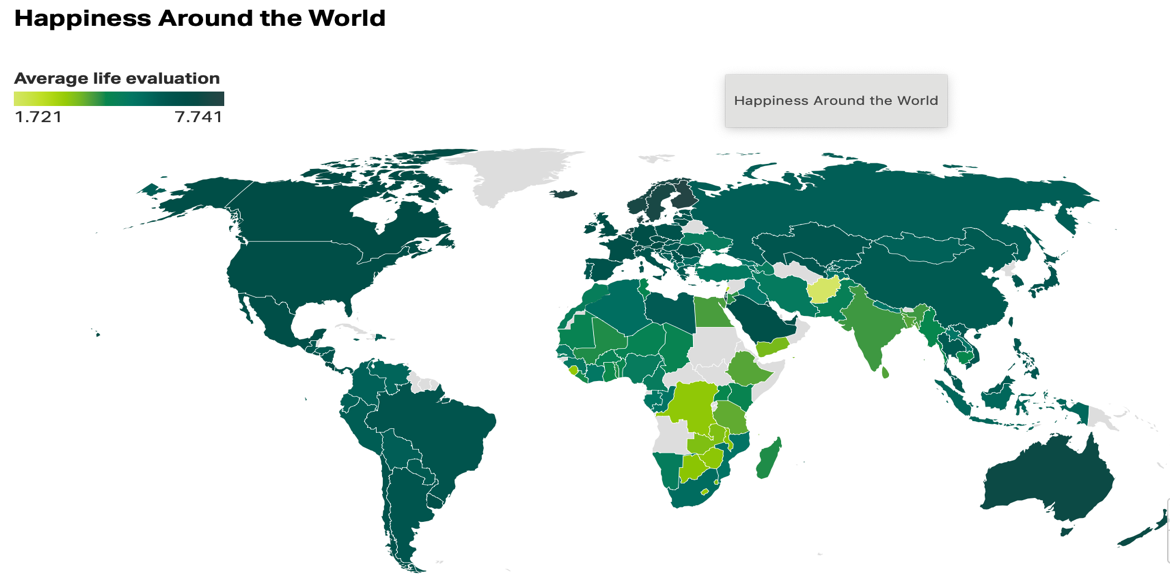
World Happiness Report 2024

Context: World Happiness Report 2024 was released recently. 

About World Happiness Report 2024

  • Published by: From 2024, World Happiness Report is a publication of the Wellbeing Research Centre at the University of Oxford, UK. Earlier, it was the publication of the UN Sustainable Development Solutions Network. 
  • Agencies involved: Gallup, Oxford Wellbeing Research Centre, UN Sustainable Development Solutions Network, and the WHR’s Editorial Board.
  • Methodology: Based on self-evaluation of variables like GDP per capita, social support, healthy life expectancy, freedom, generosity, and corruption.
    • GDP per capita gives information about the size of the economy and how the economy is performing.
    • Social support or having someone to count on in times of trouble.
    • Healthy life expectancy in terms of physical and mental health.
    • Freedom to choose what you do with your life.
    • Generosity shows positive engagement in society such acts of charity donation.
    • Level of absence of corruption.
  • Ranked on a scale of 0 (Worst) to 10 (Best).
  • Bhutan sponsored a Resolution 65/309, “Happiness: Towards a holistic approach to development,” adopted by the General Assembly of the United Nations in 2011 and first edition launched in 2012.
  • India ranked at 126 out of 146.

qRhpC6OIAdqW5oeMNAsBauy4ghGx8NKupGV04hJfwZKiN9SnlW8rPNzOQNbcF8zbX Kp01e7 qDVXPbUqfuv6XXgC1ZS6v9qRXKo Jea5GytXWtYd8YoSJR97DEZphDvhVNOA3TGe5nVj8 ItSQ0A

odTuDzw5p 9BIpTxUIrcPhgmsa0lx Xs hVBH9upuoLHgWuEF56D16MyekXPQOjcKi6tPK7EShTkQrD6U 0qQi YhVF6RUDJcDQ5XsuQkPXV88AJOo97AS1OAdGKTgVbfVWum7hbOanij1AC5tgHQw

GDP per capita gives information about the size of the economy and how the economy is performing

International Partnership for Hydrogen and Fuel Cells in the Economy (IPHE)

Context: 41st Steering Committee Meeting of International Partnership for Hydrogen and Fuel Cells in the Economy (IPHE) is being hosted in India.

image 77

About International Partnership for Hydrogen & Fuel Cells in the Economy (IPHE)

IPHE is an international partnership mechanism to organise and implement, effective, efficient and focused international research, development, demonstration and commercial utilisation activities related to hydrogen and fuel cell technologies.

The formation of IPHE was facilitated by US Department of Energy and US Department of Transportation in 2003 to foster international cooperation on hydrogen and fuel cell.

Membership of IPHE: 23 Countries including India and the European Commission. However, membership of IPHE does not result in any legally binding obligations on Partners.

Functions of IPHE are:

  • Identify and promote potential areas of bilateral and multilateral collaboration on hydrogen and fuel cell technologies.
  • Analyse and recommend priorities for research, development, demonstration and commercial utilisation of hydrogen technologies and equipment.
  • Analyse and develop policy recommendation on technical guidance, including common codes, standards and regulations to advance hydrogen and fuel cell technology development, demonstration and commericial use.
  • Foster implementation of large-scale, long-term public private cooperation to advance hydrogen and fuel cell technology and infrastructure research, demonstration and commercial use, in accordance with Partners' priorities.
  • Coordinate and leverage resources to advance bilateral and multilateral cooperation in hydrogen  and fuel cell technology research, development, demonstration and commercial utilisation.
  • Address emerging technical, financial, legal, market, socio-economic, environmental and policy issues and opportunities related to hydrogen and fuel cell technology that are not currently being addressed elsewhere.

Organisation of IPHE

  • Chair of the IPHE is elected by IPHE members for a term of two years, with a potential for renewal.
  • Steering Committee with two representatives for each of the Partner countries governs the overall framework and procedures of IPHE.
  • Secretariat of IPHE to be coordinate overall activities of IPHE.

Funding of IPHE: Any costs arising from the activities will be borne by the Partner that incurs them. Secretariat Office is supported by voluntary contributions (Financial or in-kind) of all members.

BhashaNet Portal launched for Promoting Universal Acceptance of Internet

Context: Ministry of Electronics and Information Technology (Meity) and National Internet Exchange of India (NIXI) have launched the BhashaNet Portal on the Universal Acceptance Day.

About BhashaNet Portal

BhashaNet Portal has been developed by NIXI and MEITY to develop an ecosystem to enable citizen to easily create, communicate, transact, process and retrieve information with ease in digital medium without language barrier.

  • Encouraging use of local language website name and email id.
  • Promoting awareness of local language url and email id.
  • Developing policies and regulations.
  • Supporting technical collaboration.
  • Engagement of website owners, web-developer community, web security experts.
image 73

Internationalized Domain Names (IDNs)

  • These enable people to across the world to use domain names in local languages and scripts. IDNs are possible in all Indian languages since they are formed using characters from different scripts such as Hindi, Bengali, Gujrati or Tamil.
  • Under the BhasaNet Portal, .Bharat is available in 22 Scheduled Languages.

Email address internationalization (EAI)

  • It is the process of allowing email addresses to use non-ASCII characters, such as those used in languages like Hindi, Marathi, Bengali, Gujarati or Tamil etc. in addition to traditional ASCII characters used in English-based email addresses.
  • EAI uses Unicode encoding standard to represent non-ASCII characters in email addresses.
  • Requires changes to the way that email is handled by both email clients and email servers to email clients to display non-ASCII characters in the user interface and email servers to be able to process non-ASCII addresses correctly.
  • Technical standards to support EAI:

(i) SMTPUTF8: Allows email addresses with non-ASCII characters to be sent using Simple Mail Transfer Protocol (SMTP).

(ii) IDNA2008: Allows domain names with non-ASCII characters to be translated into ASCII-based Domain Name System (DNS) used by the internet.

Universal Acceptance

  • The basic idea behind Universal Acceptance is all domain names and all email addresses work in all software applications. It is a necessity for a truly inclusive internet to allow non-English speakers to access internet.
  • Universal Acceptance is a foundational requirement for a truly multilingual internet in which all internet users across the world can navigate entirely in local languages.
  • Essential for continued expansion of the internet and provides a gateway to the next billion internet users.
  • Enables the private sector, government and societies to better serve their communities through the use of an increasing number of new domains, including non-Latin based,

Universal Acceptance Day

  • Universal Acceptance Day is an awareness event celebrating the importance of ensuring that all domain names and email addresses can be used by all internet users.
  • In 2023, India was host of the First Global UA Day as the flag bearer to promote and promulgate Universal Acceptance for digital inclusion.
  • Global Universal Acceptance Day is scheduled to take place on March 28, 2024 in Belgrade, Serbia.

Universal Acceptance Guidelines

  • Universal Acceptance Guidelines are a set of best practices and recommendations for supporting the use of all domains names and email addresses, regardless of their script, language or format.
  • The guidelines for Universal Acceptance have been developed by Universal Acceptance Steering Group (UASG), a community led initiative that works to promote Universal Acceptance of all domain names and email addresses.
  • Universal Acceptance Steering Group (UASG) is a community led initiative that was formed in 2015 and funded by ICANN. It works to raise awareness of the importance of UA globally, provide free resources to organisations to help them become UA-ready and measure the progress of UA adoption.

World Meteorological Organisation

Context: In line with observations by climate agencies, World Meteorological Organisation has officially confirmed 2023 to be the hottest year on record. 

State of Global Climate Report

  • The State of Global Climate Report” (released by WMO) stated that the global average near-surface temperature was 1.45 degrees Celsius above the pre-industrial baseline.
  • It was the warmest 10-year period on record. 
  • The previous, joint warmest years were 2016 at 1.29 Celsius above the 1850–1900 average and 2020 at 1.27 degree Celsius.

About World Meteorological Organisation

  • As a specialized agency of the United Nations, WMO is dedicated to international cooperation and coordination on the state and behaviour of the Earth’s atmosphere, its interaction with the land and oceans, the weather and climate it produces, and the resulting distribution of water resources. 
  • WMO facilitates and promotes:
    • Establishment of an integrated Earth System observation network to provide weather, climate, and water-related data.
    • Establishment and maintenance of data management centers and telecommunication systems for the provision and rapid exchange of weather, climate, and water-related data.
    • Creation of standards for observation and monitoring to ensure adequate uniformity in the practices and procedures employed worldwide and, thereby, ascertain the homogeneity of data and statistics.
    • Provision of weather, climate, and water-related services - through the application of science and technology in operational meteorology and hydrology - to reduce disaster risks and contribute to climate change adaptation, as well as for sectors such as transport (aviation, maritime and land-based), water resource management, agriculture, health, energy, and other areas.
    • Activities in operational hydrology as well as closer cooperation between National Meteorological and Hydrological Services in states and territories where they are separate.
    • Coordination of research and training in meteorology and related fields.
  • WMO Strategic Plan
    • Disaster risk reduction
    • The Global Framework for Climate Services (GFCS)
    • The WMO Integrated Global Observing System (WIGOS)
    • Aviation meteorological services
    • Polar and high mountain regions
    • Capacity development
    • Governance
  • Publications/Reports by WMO
    • Atlas of Mortality and Economic Losses from Weather, Climate and Water-related Hazards
    • Global Status of Multi- Hazard Early Warning Systems
    • Greenhouse Gas Bulletin
    • Provisional State of the Global Climate
    • State of Climate Services
    • State of Global Water Resources
    • State of the Climate in Africa
    • State of the Climate in Asia
    • State of the Climate in Europe
    • State of the Climate in Latin America and the Caribbean
    • State of the Climate in the South-West Pacific
    • State of the Global Climate
    • The State of the Global Climate Decadal Reports
    • United in Science
    • WMO Air Quality and Climate Bulletin
    • WMO Airborne Dust Bulletin
    • WMO Co-led Reports

National Mission on Edible Oils-Oil Palm (NMEO-OP)

Context: The Ministry of Agriculture and Farmers Welfare has made Aadhaar mandatory for oil palm farmers to claim government subsidy, which will be directly transferred into their bank accounts under the National Mission on Edible Oils-Oil Palm (NMEO-OP).

National Mission on Edible Oils-Oil Palm (NMEO-OP): Overview

  • Launched in: 2021
  • Type of scheme: Centrally Sponsored Scheme
  • Nodal ministry: Ministry of Agriculture & Farmers Welfare
  • Financial outlay: Rs. 11,040 crores
  • Aim: For substantial increase in oil palm cultivation and crude palm oil production.
  • Targets: To increase the area of oil palm to 10 lakh hectares from 3.5 lakh by 2025-26 .
  • To increase the Crude Palm Oil production from 0.27 lakh tonnes to 11.20 lakh tonnes by 2025-26.
  • Key features: There are two major focus areas of the Scheme.
    • Price assurance: The assurance to the farmers will be in the form of the viability gap funding and the industry will be mandated to pay 14.3% of the Crude Palm Oil (CPO) price.
    • Assistance for inputs/interventions: A substantial increase has been made for planting material for oil palm and this has increased from Rs 12,000 per ha to  Rs. 29000 per ha. Further substantial increase has been made for  maintenance and inter-cropping interventions, establishment of seed gardens, nurseries, micro irrigation, bore well/pumpset/water harvesting structure, vermicompost units, solar pumps, harvesting tools, custom hiring centre cum harvester Groups, farmers and officers training, and for replanting of old oil palm gardens etc.
    • Special focus on the North east region and the Andaman and Nicobar Islands, with a focus on increasing the area and productivity of oilseeds and Oil Palm. 

About Oil Palm: 

  • It is an edible vegetable oil derived from the fruit of the oil palms.
  • It is used in food manufacturing, beauty products, biofuel, and cookies. 
  • It is of two types
    • Crude palm oil, used for cooking.
    • Palm kernel oil, used for industrial purposes.
  • India is the fifth largest oilseed crop producing country in the world, India is also one of the largest importers of vegetable oils.
  • Andhra Pradesh, Telangana, and Kerala are major oil palm-growing States and contributing to 98% of the total production.
  • Indonesia is the world's largest producer of palm oil.
  • Indonesia and Malaysia together account for almost 90% of the global palm oil production.

Small Scale LNG

Context: Union Minister for Petroleum and Natural Gas has dedicated to the nation India’s first small scale liquified natural gas (SSLNG) unit at GAIL (India) Ltd.’s Vijaipur complex in Madhya Pradesh. 

Need for Small Scale LNG

  • Government Ambition: Government aims to increase the share of Natural gas in its primary energy mix to 15% by 2030 from a little more than 6% at present.
  • Reduction in Pollution: Natural gas is far less polluting than conventional hydrocarbons like coal and oil.
  • Reduce import burden: Natural gas is cheaper than oil (85% of oil requirement comes from imports). Replacing a major chunk of diesel consumption by LNG could lead to substantial foreign exchange savings.
  • Transition fuel: Natural gas is seen as a key transition fuel in India’s journey towards green energy and future fuels.
  • For scaling up consumption: Large scale pipeline projects that are in the works will take years to be completed; even so, last mile delivery challenges may persist in many parts of the country.
  • More mileage: LNG offers a slightly longer range to vehicles with similar sized fuel tanks.

What is Small Scale LNG?

  • It refers to the liquefaction of natural gas and its transportation using unconventional means in a significantly smaller scale operation than the usual large-scale liquefaction, regasification, and the transportation infrastructure and processes.
  • Simply put, LNG-gas in its liquid and super chilled form is supplied in specialized trucks and small vessels to industrial and commercial consumers in regions that are not connected by pipelines.
  • In a relatively traditional use case, such as supplying compressed natural gas (CNG) for vehicles and piped gas for households and manufacturing units, the buyer would regasify the LNG using small vaporizers and then supply to end users.
  • Where the fuel is to be used directly in its liquid form, it would be supplied to end users without regasification.
  • The SSLNG chain can start from a large-scale LNG import terminal from where the LNG, instead of being regasified and supplied through pipelines, can be transported to consumers by cryogenic road tankers or small vessels.
  •  The chain can also start at locations with ample natural gas supply or production, where small liquefaction plants can be set up.
image 71

Working of SSLNG

  •  There are two treatment skids:
    • Zeolite pre-treatment skids: It is used to process natural gas at a pressure of 15 bar to remove non desirable components such as nitrogen, water, Sulphur, and Carbon di oxide.
    • Liquefaction skids: known as cryo box for converting natural gas to LNG at pressure of around 260 bar.
      • The gas is cooled by a propane based external refrigeration system to minus 60-70 degrees Celsius, and then subjected to expansion, such that the temperature falls below minus 140 degrees Celsius allowing it to liquify.
      • The LNG will then be dispatched by cryogenic tankers to nearby areas for use in city gas distribution networks as CNG and piped gas, and in LPG filling stations for medium and heavy vehicles.
      • The SSLNG unit is controlled by an automated, web based supervisory control and data acquisition (SCADA) system, a mechanism that is typically used to monitor large industrial devices and processes.

Challenges for India

  • Lack of easy availability of LNG powered vehicles.
  • High initial cost of LNG based vehicles as compared to diesel and petroleum-based vehicles.
  • Absence of an LNG vehicle financing system.
  • The nonexistence of LNG retail network.

Efforts taken

  • Petronet has collaborated with commercial vehicle manufacturers and other public sector oil and gas companies for trials and pilot projects for LNG- fueled trucks and buses.
  • Petronet has established a few LNG dispensing stations along highways.
  • GAIL is looking to build LNG dispensing stations along major highways.