Security Forces

India needs National Security Doctrine

Context: In the wake of the ongoing confrontation between India and Pakistan, after the Pahalgam terrorist attack in Kashmir, the need for a comprehensive National Security Doctrine for India becomes more pertinent. 

Relevance of the Topic: Mains: National Security Doctrine: Need and Significance. 

What is the National Security Doctrine?

  • National Security Doctrine (NSD) is a comprehensive framework that outlines a country’s national interest and security objectives. It defines traditional, non-traditional threats and opportunities, and outlines the accountability of its security agencies.

Developed countries have certain core principles that guide their military machines called the strategic doctrine. However, India does not have an explicit National Security Doctrine. 

Need for National Security Doctrine in India:

Traditional and non-traditional security challenges facing India have necessitated a comprehensive National Security Doctrine. 

  • Internal Security Challenges: 
    • Cross-border terrorism in Jammu & Kashmir
    • Naxalism and North-East Insurgency
    • Ethnic tensions & communal conflicts. E.g., Manipur Conflict 
  • External Security Challenges:
    • Boundary-disputes and skirmishes with China & Pakistan
    • China's Belt and Road Initiative and its influence in the Indian Ocean Region
  • Non Traditional Security Challenges: 
    • Climate change, natural disasters and outbreak of pandemic
    • Drug trafficking and transnational crimes
    • Cyber-security threats on critical infrastructure

Various committees like Naresh Chandra Task Force (2012), Parliamentary Standing Committee on Defence (2021) have emphasised the need for NSD.

Significance of National Security Doctrine:

  • Strategic Guidance: Ensure coherent long-term planning and Standardisation of Procedures (E.g., SOPs for military modernisation and allocation of resources)
  • Prompt and Effective Decision-Making based on the National Security Strategy outlined in the NSD. 
  • Integrated Defence Planning: Synergy across Army, Navy, and Air Force to meet hybrid threats and increased operational efficiency. It will synchronise the coordination among Ministries, Intelligence Agencies, and Armed forces.
  • Consistent Security Response: Reduce adhocism in dealing with security challenges during coalition government or change in government. 
  • Define India’s role in the world and showcase itself as a net security provider, such as during the Mission Sagar initiative for COVID-19 pandemic relief.

The doctrinal approach to security would not only minimise the threat of war but also enhances India’s sphere of positive influence. This would also fill the crucial gaps in higher military management and offer a strategic blueprint to navigate the complex global security landscape.

Will the Agnipath scheme be revamped?

Context: After the election results, NDA allies raised the issue of Agnipath and called for a discussion on it. The government is open to changes and discussions are on.

About Agnipath Yojana: 

  • Launched in: 2022
  • Nodal ministry: Ministry of Defence
  • Aim: To ensure a youthful profile for the forces.
  • Eligibility: 17.5 to 21 years.
  • Key features: Replaces the permanent recruitment process in the armed forces.
    • It is a new human resource management scheme for the Armed Forces. Candidates inducted through this scheme will be called Agniveers.
    • Agniveers are recruited for four years on completion of which, up to 25% would be selected into the regular ranks on a permanent basis.
    • The Army is inducting 40,000 Agniveers per year and the Navy and Air Force are recruiting around 3,000 Agniveers each. 
    • Agniveers during their tenure can get class 12 certificates or a Bachelor’s degree in addition to other skill certificates and when leaving after four years will get a lumpsum amount but are not eligible for pension. 
    • On completion of the engagement period of four years, Agniveers will be paid a one-time ‘SevaNidhi’ package which shall comprise their contribution including accrued interest thereon and a matching contribution from the Government equal to the accumulated amount of their contribution
About Agnipath Yojana

Benefits of Agnipath Scheme: 

  • It will inculcate values of discipline, sacrifice, teamwork, physical fitness, ingrained loyalty for the country and brotherhood
    • They will be provided with adequate re-employment opportunities for those returning to society and could emerge as role models for the youth. Agniveers will get preference in PSUs, and State Governments’ jobs.
  • After serving the tenure, youth will be able to contribute to other sectors more effectively. Trained personnel will be available to boost national security in times of external threats, internal threats and natural disasters.
  • Modernize the military and provide army with youthful tech savvy soldiers.
  • Across the globe, there is a trend towards reduction in the number of personnel and emphasis on increasing capital expenditure on modern weapons and equipment.

Why is the Agnipath scheme being revamped? 

  • The Army faces a personnel shortage, as 60,000 annual retirements and only 40,000 new recruits yearly, a deficiency exacerbated by the COVID-19 recruitment halt for over two and a half years.
    • The 25% conversion rate to regular soldiers may worsen the shortage.
  • The focus on recruiting a large number of individuals for a short period may compromise the quality of personnel and will dilute professionalism, military ethos & fighting spirit.
  • Takes 7-8 years to become a fully trained combat-ready soldiers. Agniveers will be risk-averse, will lead to the bulk looking for a second career. It may also hit the basic ethos of ‘Naam, Namak and Nishaan’ (reputation of battalion, fidelity & ensign/colours) for which soldiers fight
  • Lead to militarisation of society with around 35,000 combat-trained youth being rendered jobless every year.

Way forward: 

  • For enhancing intake numbers, increasing the permanent recruitment from 25% to at least 50%.
  • Increase the age limit for entry though the technical route from 21 to 23 years to attract enough technically qualified individuals.
  • The Indian Army suggested increasing the service period for Agniveers from 4 years to 7-8 years.
  • Agniveers should receive a contributory pension plan, a generous gratuity, and compensation for any disabilities incurred during training.
  • Comprehensive training and skill programs should be provided to help Agniveers smoothly transition into civilian life.

Inter-Services Organisation (Command, Control & Discipline) Act, 2023

Context: Ministry of Defence has notified the Inter-Services Organisations (Command, Control and Discipline) Act, 2023. To address the multi-faceted security threats by India there has been emphasis towards increasing jointness and integration of armed forces.

Some efforts towards this include Andaman & Nicobar Command, Strategic Forces Command, Office of Chief of Defence Staff and plans to create five theatre commands. Inter-Services Organisation bill is being enacted to enable joint-services command to function with greater efficiency, expeditious disposal of cases, avoid multiple proceedings and will be a step towards greater integration & jointness among the Armed Forces personnel.

Current challenges to creation of theatre commands and jointness 

  • Currently, there was no legal framework for creation of the Inter-Services Organisation.
  • In exigencies, allows personnel from CAPFs work with Inter-Services Organisation.
  • Commander-in-Chief or Officer-in-Command of inter-service organisations cannot exercise disciplinary /administrative powers over personnel who come from Army, Navy and Airforce and are regulated by these respective acts like Army Act, Navy Act, Air Force Act.
  • Officers serving in ISOs need to be reverted to their respective parent service units for disciplinary or administrative actions leading to delays in justice and administering justice.

The Act will promote theaterisation and jointness by:

  • Pave way for much greater integration & jointness amongst the three Services, lay strong foundation for creation of Joint Structures and further improve the functioning of the Armed Forces.
  • Empowers central government to constitute an inter-services organisation by notification leading to greater integration and jointness in ISOs.
  • Applies to other personnel apart from Armed Forces like CAPFs.
  • The Act will allow tangible benefits such as maintenance of effective discipline in inter-services establishments by the Heads of Inter-Services Organisations by:
    • Empowers Commander-in-chief or Officer-in-Command of ISO with all disciplinary and administrative powers on personnel serving in ISOs.
    • Ensures effective discipline and efficiency in ISOs by heads of ISOs.
    • No requirement of reverting personnel under disciplinary proceedings to their parent service units.
    • Expeditious disposal of cases of misdemeanour or indiscipline.
  • Saving public money & time by avoiding multiple proceedings.
  • This Act further enhances India's movement towards defence theaterisation and further dialogue. and planning is required to further boost India's security.

Salient Feature of Inter-Services Organisation (Command, Control & Discipline)

  • Empowers the Central Government to constitute an Inter- Services Organisation.
  • ISO Act is an enabling act. It does not propose any change in the existing Service Act/Rules/Regulations which are time tested and withstood judicial scrutiny. Service personnel when serving in or attached to an Inter-Services Organisation will continue to be governed by their respective Service Acts. What it does is to empower Heads of Inter-Services Organisations to exercise all the disciplinary and administrative powers as per the existing Service Acts/Rules/Regulations, irrespective of the service they belong to. 
  • The ‘ISO Act - 2023’ shall be applicable to all personnel of regular Army, Navy, and Air force, and to persons of other forces as notified by the Central Government, who are serving in or attached to an Inter-Services Organisation.
  • Empowers the Commander-in-Chief, Officer-in-Command or any other officer specially empowered in this behalf by the Central Government with all the disciplinary and administrative powers in respect of personnel serving in or attached to their Inter-Services Organisations for the maintenance of discipline and proper discharge of their duties, irrespective of the service to which they belong.
  • The Commander-in-Chief or the Officer-in-Command means General Officer/Flag Officer/Air Officer who has been appointed as Commander-in-Chief of Officer-in-Command an Inter-Services Organisation.
  • To maintain Command and Control in absence of the Commander-in-Chief or the Officer-in-Command, the officiating incumbent or the officer on whom the command develops in absence of a Commander-in-Chief or Officer in Charge, will also be empowered to initiate all disciplinary or administrative actions overs the service personnel, appointed, deputed, posted or attached to an Inter-Services organisation.
  • Empowers the Commanding Officer of an Inter-Services organisation to initiate all disciplinary or administrative actions over the personnel appointed, deputed, posted, or attached to that Inter-Services Organisation. For this Act, Commanding Officer means the officer in actual command of the unit, ship or establishment.

Raksha Mantri approves the posting of Women Officers of the Territorial Army along the Line of Control

Context: In a major development, the Ministry of Defence, Department of Military Affairs, has approved an amendment to existing cadre management provisions for Women Officers of the Territorial Army (TA).

About Territorial Army

  • The Territorial Army is a part of the Regular Army.
  • Its present role is to relieve the Regular Army from static duties and assist Civil Administration
  1. In dealing with natural calamities and maintenance of essential services in situations where the life of the communities is affected or the security of the Country is threatened and
  2. To provide units for the Regular Army as and when required.

Arguments in favour

Military Readiness: Allowing a mixed-gender force keeps the military strong. The all-volunteer forces are severely troubled by falling retention and recruitment rates. Widening the applicant pool for all jobs guarantees more willing recruits. Women, who choose to become active combat soldiers, are unlikely to shirk their duty by becoming pregnant after a call-up as these women have willingly joined the army.

Effectiveness: The blanket restriction for women limits the ability of commanders in theatre to pick the most capable person for the job.

Tradition: Training will be required to facilitate the integration of women into combat units. Cultures change over time and the masculine subculture can evolve too. Many previously masculine professions have been successfully opened to women over the past century like driving, managing, judging etc.

Modern warfare and public support: In the modern world of combat (Afghanistan, Iraq), all women serving in the military are exposed to “front-line risks”. Support for women serving in the armed forces has not wavered as warfare has changed, a clear sign that the necessity of women serving in combat is recognized.

Cultural Differences & Demographics: Women are more effective in some circumstances than men. Allowing women to serve doubles the talent pool for delicate and sensitive jobs that require interpersonal skills not every soldier has. Having a wider personnel base allows militaries to have the best and most diplomatic soldiers working to end the conflict quickly.

Career advancement: As combat, duty is usually regarded as necessary for promotion to senior officer positions, denying female personnel this experience ensures that very few will ever reach the highest reaches of the military and so further entrenches sexism. Women have to be given the same opportunities as men, in the army in order to have the same opportunities they have to be exposed to the same risks

Arguments in opposition

Physical Ability: While the majority of jobs in the armed forces are open equally to men and women, there are some to which women are just not physically suited. The standards of physical fitness have been set to suit men, and women attempting to reach them will over-stretch themselves.  In addition, combat units engage in activities designed to suit men’s capabilities. Women serving in integrated units will suffer higher injury rates as a result of this.

Efficiency: Some women will be able to meet the required standards, but most will not. While the integration of women into combat is possible for those qualified, the small number versus the additional logistical, regulatory and disciplinary costs associated with integration does not make it a worthwhile move.

Morale & Cohesion: Having women serving in direct combat may hamper mission effectiveness by hurting unit morale and cohesion.

Military readiness: Pregnancy can affect the deployability of a unit when the unit has a disproportionate number of women or is understaffed.

Tradition: Men, especially those likely to enlist, maintain traditional gender roles. In some situations, men may act foolishly to protect women in their combat units. Harassment and resentment of the presence of women in a hyper-masculine military subculture would likely become a problem.

Abuse by Enemy: Both male and female prisoners are at risk of torture and rape, but misogynistic societies may be more willing to abuse woman prisoners.

This helicopter programme cannot go into a tailspin

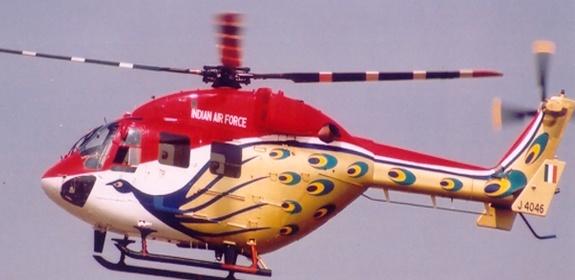
Context: The chequered history of India’s indigenous Advanced Light Helicopter (ALH-Dhruv) touched a low when a Dhruv (IN-709) in the Indian Navy’s newly-acquired flee was on a routine flight, reportedly experienced a “sudden loss of power and rapid loss of height” close to the coast of Mumbai. 

About ALH Dhruv:

Dhruv Advanced Light Helicopter
  • It is a twin engine, multi-role, multi-mission new generation helicopter in the 5.5 ton weight class.
  • The basic Helicopter is produced in skid version and wheeled version. 
  • Dhruv is “type –Certified” for Military operations by the Centre for Military Airworthiness Certification (CEMILAC) and civil operations by the Directorate General of Civil Aviation (DGCA).
  • Certification of the utility military variant was completed in 2002 and that of the civil variant was completed in 2004. 
  • The major variants of Dhruv are classified as Dhruv Mk-I, Mk-II, Mk-III & Mk-IV.
  • Dhruv has also been supplied to Nepal Army & Mauritius Police, Maldives.

Roles of Dhruv

  • Passenger / Commuter Role
  • VIP Travel
  • Causality Evacuation
  • Under Slung Load
  • Rapid Deployment of Forces
  • Logistic Air Support
  • Search and Rescue
  • Training

Source: The Hindu & HAL Official website