Financial Markets

Delay in launch of trading in Electronic Gold Receipts in India

Context: Taxation, particularly GST, has led to the delay of launch of trading Electronic Gold Receipt instruments. 

Gold Trading in India:

  • India is the second-largest consumer of gold globally, with annual gold demand of approximately 800-900 tonnes and plays a significant role in international gold markets. 
  • However, India's domestic commodity market has been facing several challenges in terms of gold exchange trades, like high market fragmentation and low transparency in pricing, etc.
  • In this regard, the finance minister during the Union Budget of FY 2021-22, had announced that SEBI would be responsible for becoming the regulator of gold exchanges. 
  • At present, investors in India can trade in Gold Futures, Gold ETFs, and Sovereign Gold Bonds. But unlike other countries, the option to trade in spot gold was not available until now. SEBI, in 2021, approved the Framework for Gold Exchange and SEBI (Vault Managers) Regulations, 2021, to enable spot trading in gold.

What are Gold Exchanges?

  • Gold Exchange is national platform for buying and selling electronic gold receipts. 
  • Trading in gold based on price discovery driven by domestic supply and demand of gold.

What are Electronic Gold Receipts (EGRs)?

  • EGRs are instruments representing gold in electronic and demat form and notified as securities, with trading, clearing and settlement features. They will be traded on gold exchanges.
  • Ministry of Finance added EGRs as securities under the Securities Contract (Regulation) Act, 1956.

Features of Electronic Gold Receipts (EGR)

  • EGRs are like stocks which can be traded on exchanges and held in demat accounts.
  • Trading exchange holds the underlying value of the EGRs in physical gold in a vault.
  • It is the first spot physical gold exchange trading product.
  • All market participants are eligible for trading in EGR, individual and institutional.
  • Taxed as security under the Securities Contract Act, 1956 and Securities Transaction Tax.
  • GST levied on conversion of EGRs into physical gold.
  • Capital Gains Tax (CGT) on EGRs if the investment is held for more than 3 years.
  • EGRs include both sources of physical gold, imported and domestic.
  • Gold confirming to Good Delivery Standard notified by London Bullion Market Association and Bureau of Indian Standard (BIS) is only allowed to be stored as physical gold.  
  • There are no limits on maximum deposit of gold by one investor.
  • CDSL and NSDL are the depositories holding the EGRs of beneficial owners.
  • Inter-operability between the vault managers has been allowed.  

Criteria for Vault managers:

  • A corporate body incorporated in India.
  • A net worth of at least Rs. 50 crores.
  • Regulated by SEBI as an intermediary.

Need for an Indian Gold Spot Exchange

  • Efficient price discovery of Gold: India is the second largest consumer of gold in the world. But India is largely dependent on imports for meeting the domestic demand. This lopsided demand vs. production makes India the largest importer of gold, affecting the balance of payments and makes India a price taker rather than price maker. But the real time price discovery mechanism through spot trading of EGRs can transform India into a price maker.
  • Ensure uniform national prices of Gold: In the physical market, different locations have different prices of gold. So, Gold prices are not uniform. Hence, Gold Spot Exchange will ensure that a uniform price prevails pan-India based on market principles.
  • Efficient gold spot market: Lead to efficient and transparent domestic spot price discovery, assurance in quality of gold, promotion of Gold conforming to Good Delivery Standard with active retail participation, greater integration with financial markets, and augment greater gold recycling in the country.
  • Help India in evolving as Global gold trading hub.

Way forward

Recent steps of Indian government like launch of India International Bullion Exchange at GIFT IFSC, investment in Sovereign Gold Bonds, Electronic Gold Receipts are steps in the right direction. Going forward, existing issues like delay due to GST applicability on EGRs need to be addressed to further streamline the gold trading in India. 

Regulation S

Context: HDFC Bank has raised $750 mn through Regulation S Bonds.

About Regulation S Bonds

  • Regulation S is a regulation of the Securities and Exchange Commission (SEC) of the United States of America. It provides that offers and sales of securities that occur outside of the United States are exempt from the registration requirements of Section 5 of the Securities Act of 1933 (the “Securities Act”).
  • Section 5 of the Securities Act requires that all securities offered or sold by means of interstate commerce be registered unless an exemption is available. 
  • The purpose behind Section 5 is to ensure adequate disclosure before a security is offered to the public so that the public may make informed investment decisions

Regulation S permits these types of transactions to occur without SEC registration. 

  • Benefits: It allows issuers and other distributors of securities to raise capital more quickly, more discreetly and less expensively than would be the case if registration were required. This encourages foreign investors to buy US financial assets in order to increase the liquidity of US markets.
  • Risks: Abuse of Regulation S means that securities are being offered or sold without adequate disclosure to the public.

'Zero Coupon Zero Principle' Instruments

Context: SEBI has unveiled a roadmap for public issuance of 'Zero Coupon Zero Principle' instruments by not-for-profit organisations (NPOs) and listing of such instruments on the Social Stock Exchange (SSE).

Zero Coupon Zero Principal Instruments

  • These are financial instruments using which any non-profit organisation (NPOs) can raise funds which are listed on the social stock exchange.
  • Usually, NPOs raise money through donations or CSR initiatives of individuals and corporates. Thus, those willing to donate money to NPOs, can buy these securities listed on SSEs.
  • ZCZP instruments are structured like a bond. In a regular bond, the entity raising money using a bond, has to make interest payments and principal payments when the bond matures. However, the ZCZP is issued by an entity not raising loans but donations. Thus, the ZCZP issuing entity does not have to pay interest (zero coupon) and does not have to pay the principal (zero principal) either.
  • ZCZP instruments issued by a NPO can be issued only for a specific project or activity to be completed within a duration specified in fund raising document.
  • Central Government (Ministry of Finance) has declared Zero Coupon Zero Principal instruments as securities under the Securities Contracts (Regulation) Act, 1956 in 2022.

Regulations for issuing of Zero Coupon Zero Instruments by SEBI

  • Minimum issue size for ZCZP instruments is Rs 50 lakhs.
  • Minimum application size has been kept at Rs 10,000.
  • Minimum subscription required to be achieved will be 75% of the funds proposed to be raised through the issuance of such instruments. Funds will be refunded in case subscription is less than 75% of the issue size.
  • ZCZP can be issued only in dematerialised form
  • ZCZP are non-transferable.
  • ZCZP instruments will be listed on Social Stock Exchange.

Read also: What is Bond Yield?

T+1 Settlement System

Context: The Securities and Exchange Board of India (SEBI) is working to implement instantaneous settlements in secondary market trades, and is likely to complete the process next fiscal year.

image 107

What is a Settlement Process?

  • The settlement refers to the official transfer of shares from the seller's account to the buyer's account. 

Recent Developments

  • Indian capital market regulator SEBI (Securities and Exchange Board of India) announced on Monday to move to T+1 settlement cycle for all scripts from 1st October 2023. This means effective from first October 2023, all trades will be settled one day after the date of trade instead of the current T+2 settlement cycle. 
  • Earlier, India was following T+2 settlement and has now adopted T+1 settlement.
  • T+1 means that trade-related settlements must be done within one day of the transaction's completion. 
  • Trades on Indian stock exchanges are currently settled in two working days after the transaction is completed (T+2). For example, if you buy shares on Wednesday, they will be credited to your Demat account by the next day, which is Thursday.
  • Now, with the adoption of (T+1) settlement, the trade gets settled within one day. 

Significance

  • Most large stock markets, like in the US, Europe, Japan, still follow the T+2 settlement cycle of trade settlement. India has now become the second country after China to go for T+1 settlement.
  • The move is expected to increase volume in the cash segment as one would be able to move from one stock to another on the same date instead of waiting for settlement of one's trade after one day or two days.
  • Instant settlement would also mean that one won't be able to trade if they have no money available in their demat account. This is a positive development for the brokerages as their risk management to contain chances of fraud or default would go down after this move.

Stock Market Regulation in India

Context: The Securities and Exchange Board of India (SEBI) has proposed changes in the current definition of unpublished price sensitive information (UPSI) in a bid to bring regulatory certainty and uniformity in compliance by listed entities.

About Stock Markets

  • It is a place where shares of public listed companies are traded. 
  • The primary market is where companies float shares to the general public in an initial public offering (IPO) to raise capital.
  • Once new securities have been sold in the primary market, they are traded in the secondary market - where one investor buys shares from another investor at the prevailing market price or at whatever price both the buyer and seller agree upon. The secondary market or the stock exchanges are regulated by the regulatory authority. 
  • In India, the secondary and primary markets are governed by the Security and Exchange Board of India (SEBI).
  • A stock exchange facilitates stock brokers to trade company stocks and other securities. A stock may be bought or sold only if it is listed on an exchange. Thus, it is the meeting place of the stock buyers and sellers. India's premier stock exchanges are the Bombay Stock Exchange (BSE) and the National Stock Exchange (NSE).

Laws Governing the Market

  • The securities market in India is regulated by four key laws:
    • The Companies Act, 2013
    • The Securities and Exchange Board of India Act, 1992 (SEBI Act)
    • The Securities Contracts (Regulation) Act, 1956 (SCRA)
    • Depositories Act, 1996. 
  • The framing of these laws reflect the evolution and development of the capital market in India.

Securities and Exchange Board of India (SEBI)

  • Structure:
    • Sebi is run by its board of members. The board consists of a Chairman and several other whole time and part time members. 
    • The chairman is nominated by the union government. 
    • The others include two members from the finance ministry, one member from Reserve Bank of India and five other members are also nominated by the Centre.
    • The headquarters of Sebi is situated in Mumbai and the regional offices are located in Ahmedabad, Kolkata, Chennai and Delhi.
  • The SEBI Act empowers SEBI to protect the interests of investors and to regulate and promote the development of the capital/securities market.
    • SEBI was given the power to register intermediaries like stock brokers, merchant bankers, portfolio managers and regulate their functioning by prescribing eligibility criteria, conditions to carry on activities and periodic inspections. 
    • It also has the power to impose penalties such as monetary penalties, including suspending or cancelling the registration. 
  • The SCRA empowers SEBI to recognise (and derecognise) stock exchanges, prescribe rules and bye laws for their functioning, and regulate trading, clearing and settlement on stock exchanges. 
  • As part of the development of the securities market, Parliament passed the Depositories Act and SEBI made regulations to enforce the provisions.
    • This Act introduced and legitimised the concept of dematerialised securities being held in an electronic form. Today almost all the listed securities are held in dematerialised (DEMAT) form. SEBI set up the infrastructure for doing this by registering depositories and depository participants. 
    • The depository regulations empower SEBI to regulate functioning of depositories and depository participants by prescribing eligibility conditions, periodic inspections and powers to impose penalties including suspending or cancelling the registration as well as monetary penalties.
  • Appeals against orders of SEBI and the stock exchanges can be made to the Securities Appellate Tribunal (SAT) comprising a presiding officer and two other members. Appeals from the SAT can be made to the Supreme Court.

Functions Of SEBI

  • Curbing Market Volatility: 
    • While SEBI does not interfere to prevent market volatility, exchanges have circuit filters — upper and lower — to prevent excessive volatility. 
    • However, SEBI can issue directions to those who are associated with the market, and has powers to regulate trading and settlement on stock exchanges.
      • Using these powers, SEBI can direct stock exchanges to stop trading, totally or selectively. 
      • It can also prohibit entities or persons from buying, selling or dealing in securities, from raising funds from the market and being associated with intermediaries or listed companies.
  • Monitor Fund-raising:
    • The Companies Act, which regulates companies incorporated/registered in India, has delegated the authority to enforce some of its provisions to SEBI, including the regulation of raising capital, corporate governance norms such as periodic disclosures, board composition, oversight management and resolution of investor grievances. 
    • Specific regulations are enacted by SEBI from time to time in order to:
      • Regulate fund-raising activities
      • Ensure that listed companies followed corporate governance norms
      • Regulation of entities involved in fund-raising through issues of capital such as merchant bankers.
  • Regulate Stock Exchanges:
    • The SCRA has empowered SEBI to recognise and regulate stock exchanges and later commodity exchanges in India. Powers of SEBI in this regard concerns with:
      • Declare an instrument as a security. 
      • Regulate listing of securities like equity shares, the functioning of stock exchanges including control over their management and administration. 
      • Powers to determine the manner in which a settlement is done on stock exchanges and recognising and regulating clearing corporations.
      • Provision for arbitrating disputes that arise between stock brokers who trade on stock exchanges and investors who are clients of such stock brokers.
      • Protect the interests of investors by creating an Investor Protection Fund for each stock exchange.
  • Safeguards Against Fraud:
    • Fraud undermines regulation and prevents a market from being fair and transparent. 
    • SEBI has been given the powers of a civil court to summon persons, seize documents and records, attach bank accounts and property, and to carry out investigations.
    • SEBI notified Regulations to: 
    • Prevent the two key forms of fraud, market manipulation, and insider trading. 
    • Ensures protection of investors’ interests by regulating the listing and trading of equity shares and other securities, and by registering and regulating institutions handling public funds. 

Challenges In Stock Market Regulations

  • Enforcement process: SEBI has made various regulations and issued orders as a civil court but only making regulations and giving orders is not enough if it is not able to enforce the same.
  • Dearth of human resources: SEBI unable to attract smart bright talent inside SEBI. In 2012 SEBI had 643 employees whereas the US security and exchange commission alone had 1000 people. 
  • Deepening capital market: The total number of DEMAT accounts increased by 37% in the last year, however monthly active users have declined. SEBI has done a lot to encourage people to participate in the capital market such as abolishing entry load on mutual funds, simplifying KYC norms but it needs to take some stronger steps to deepen participation in the capital market.
  • Corporate debt and securitization market: Despite numerous attempts the debt market volume has increased but it has failed to attract sufficient liquidity. 
  • Matching up to global standard: Capital markets are growing and the size of SEBI as compared to the security market is not sufficient to properly regulate the capital market. 
  • Non-transparent recruitment process: SEBI’s appointment process has always been criticised. Allegations of corruption by SEBI staff are frequently heard. The accountability mechanisms that envelope SEBI are quite poor.  
  • Wide legislative and discretionary powers with SEBI
  • Limited and selective prior consultation with the market.
  • Securities offering documents are extraordinarily bulky with little to no substantive disclosures of high quality.
  • Obsolete Regulations: as regulations on merger and acquisition are nearly six years old.

Way Forward

  • SEBI needs to strengthen its surveillance and enforcement functions.it needs to ensure that violations do not go unnoticed whether small or large.
  • It also needs to increase its human resource in both quality and quantity. It needs to significantly improve its market intelligence, technology and talent pool in order to improve its performance.
  • SEBI should work deeper participation in equity by pension, superannuation and gratuity funds, developing a vibrant retail debt segment and reducing the cost of transaction.
  • The regulator needs to develop a vibrant corporate debt market and securitization market but these largely remain part of the over the counter market.
  • Like its peers (regulators of US and UK) it needs to establish self-regulatory organisations. They can focus on routine decisions and SEBI can work on more important issues.
  • It is also very important to make the recruitment process fair and transparent.

How ASBA-like facility for secondary market trading benefits customers

Context: The capital markets regulator, Securities and Exchange Board of India (SEBI), last week approved a framework for Application Supported by Blocked Amount (ASBA)-like facility for trading in the secondary market.

The facility will be optional for investors and stock brokers. To facilitate smooth transition in the market, the framework will be implemented in a phased manner.

About Application Supported by Blocked Amount

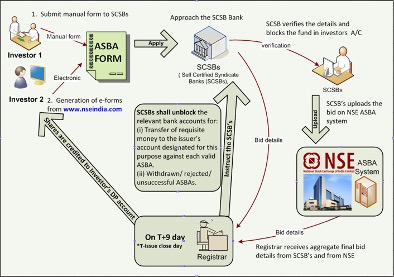
  • ASBA, which was first introduced by SEBI in 2008, is an application by an investor that contains an authorisation to a Self-Certified Syndicate Bank (SCSB) to block in the bank account the application money for subscribing to an issue.
  • Simply put, ASBA provides an alternative mode of payment in issues whereby the application money remains in the investor's account till finalization of basis of allotment in the issue (shares).
  • An SCSB is a recognised bank (e.g. HDFC or ICICI) capable of providing ASBA services to its customers.
  • The application money of an investor applying through ASBA shall be debited from the bank account only if her application is selected for allotment after the basis of allotment has been finalised. In public issues and rights issues, all investors have to mandatorily apply through ASBA.
1olMsbczIQofRqukbJd3ixFJT hDR22aBTWCo0a8K2ziocstr8nmWFmcHF8qNN8SRL8QCHdQUb0ytEbdA5okUWIPfXYVyUMrsZD6ovbkbFWikZBAeGOHYscq fm46MC8nglMZeNEkLieHOXINhM5AsM

What SEBI has done?

  • It gave its nod for an ASBA-like facility for secondary market trading. The facility is based on the blocking of funds for trading in the secondary market through UPI (Unified Payments Interface).
  • At present, ASBA is available for the primary market, wherein the initial public offering (IPO) funds only are blocked on application, and are debited only on allotment.
  • Extension of ASBA to secondary markets means brokers will no longer collect margins from clients; only a block will be placed on the bank account.

How will the ASBA facility benefit retail investors in the secondary market?

  • ASBA in secondary market trading will ensure that clients will continue to earn interest on the blocked funds in their savings account till the debit takes place.
  • There will be direct settlement with Clearing Corporation (CC), without passing through the pool accounts of the intermediaries. Hence, it will provide client-level settlement visibility to CC, and help avoid the risk of co-mingling of clients’ funds and securities.
  • It will eliminate the custody risk of client collateral, which is currently retained by the members, and is not transferred to the CC. There will be hassle-free and immediate unblocking of client’s funds and/ or return of securities in case of member default.
  • The markets regulator said the facility will bring efficiency in the secondary market ecosystem by allowing usage of the same blocked amount towards margin and settlement obligations. It will result in lower working capital requirements for members.
  • Under the proposed framework, stock brokers will be allowed to either directly settle the brokerage with the UPI clients or opt for CC’s facility to deduct standard rate of brokerage from the UPI block of the clients.

Will this impact the markets?

  • Market participants feel that the ASBA-like system for the secondary market would impact volumes. While client volumes may not be impacted, the proprietary volumes can be negatively impacted.
  • Much of these funds are client funds and that could take a hit. This is also likely to reduce the leverage provided by brokers to the clients.
  • So, there will certainly be a short-term volume impact, although it is expected to be value accretive in the long run.

Additional Tier 1 (AT1 Bonds)

Context:

  • The biggest losers in the Credit Suisse fire sale are investors in the banking major’s riskiest bonds — called Additional Tier 1 or AT1 — who are faced with a $17 billion wipeout, potentially pushing Europe’s $275 billion market for these bonds into turmoil, with likely cascading impact across other geographies.
  • This is the biggest wipeout yet for Europe’s AT1 market.

About AT1 Bonds:

  • AT1 bonds, as these instruments are popularly known, are a type of perpetual debt instrument that banks use to augment their core equity base and thus comply with Basel III norms. These bonds were introduced by the Basel accord after the global financial crisis to protect depositors.

How are these bonds different from other debt instruments?

  • These bonds are perpetual in nature — they do not carry any maturity date. 
  • They offer higher returns to investors but compared with other debt products, these instruments carry a higher risk as well. 
  • If the capital ratios of the issuer fall below a certain percentage or in the event of an institutional failure, the rules allow the issuer to stop paying interest or even write down these bonds. 
  • These bonds are subordinate to all other debt and senior only to equity.

What can investors do with AT1 bonds?

  • AT1 bonds do not have a maturity date. Banks have a call option that permits them to redeem these bonds after a certain period.

Are they safe for investors?

  • Since these bonds can be written down by banks under the directions of the Reserve Bank of India (RBI) in the event of an institutional failure, they are seen as high-risk instruments. 
  • If the bank reaches the point of non-viability, AT1 bonds are the first part of debt that will be written down. 
  • For example, AT1 bonds worth Rs 8,414 crore were written off fully during the Yes Bank reconstruction scheme in March 2020. Those AT1 investors are still locked in a court battle with the RBI and the bank seeking the return of their investments. 
  • In this backdrop, it is fair to say that AT1 bonds are high-risk instruments for investors, especially retail investors.

Why do the banks tap the AT1 bond route?

  • Banks periodically raise money issuing such bonds. 
  • At one point, lenders used to even pitch these to retail investors as an attractive option, often with returns higher than a traditional fixed deposit would offer. 
  • Indeed, there used to be significant retail interest in AT1 bonds till the Yes Bank episode.
  • The market for AT1 bonds took a hit after the Yes Bank write-off, as part of the State Bank of India-led bailout in March 2020. Investors have begun to look at these instruments with caution since then.

Impact of Credit Suisse Crisis on Bond Market:

  • At nearly $130 trillion, the global bond market far outweighs the stock market in size, and plays an outsize role in the global financial system, especially in the way governments raise funds to manage their deficits. 
  • Rumblings in the bond markets could make it harder for other lenders to raise new AT1 debt, especially when the financial sector is facing tough times. 
  • Following FINMA’s announcement of the CHF 16 billion (about $17.3 billion) write-down of Credit Suisse’s AT1 bonds, European and Asian AT1 bonds tanked on Monday. 

Impact on Indian banks:

  • The decision to write down Credit Suisse’s AT1 bonds to zero after the lender’s takeover by UBS may contribute to a higher cost of capital for banks, including Indian lenders. 
  • The write-down will weigh on the pricing of such notes and spook investors.
  • In India, AT1 bonds of Yes Bank were written down in March 2020 after the Reserve Bank of India initiated a restructuring of the troubled lender. Since then, Indian banks have raised AT1 bonds at an up to 75 basis points premium over government bonds.
  • Some bankers, however, do not see a major impact on the fundraising capabilities of Indian banks through AT1 bonds:
    • Spread between regular bonds and AT1 bonds in India is less than 150 basis points, while in the EU and the US, it is 200-250 bps. Indian lenders have limited dependence on such securities. Indian lenders are capable of enduring any potential contagion effects emanating from the US banking turmoil and the Credit Suisse episode given their manageable exposures to global counterparts. 
    • Strong funding profiles, a high savings rate, and government support are among the factors that bolster the financial institutions and that domestic banks had sufficient buffers to withstand losses on their government securities portfolio due to rising interest rates.

Additional Surveillance Measure (ASM)

  • In order to enhance market integrity and safeguard interest of investors, Securities and Exchange Board of India (SEBI) and Exchanges have been introducing various enhanced pre-emptive surveillance measures such as reduction in price band, periodic call auction and transfer of securities to Trade for Trade segment from time to time.
  • In continuation to various surveillance measures already implemented, SEBI and Exchanges have decided that along with the aforesaid measures there shall be Additional Surveillance Measures (ASM) on securities with surveillance concerns based on objective parameters viz. Price / Volume variation, Volatility etc.

There are two types of ASMs:

  • Short-term additional surveillance measures .
  • Long-term surveillance measures. 

Stocks that are moved to ASM can’t be pledged. If in case a stock that you have pledged is moved under ASM then you can’t receive collateral margins for it.

This is because according to ASM, 100% of the margin has to be levied.

The collateral value will decrease by the value of collateral obtained against that particular stock. Investors have the option of unplugging the stock or keep it pledged without collateral till it is removed from ASM.

Please note that corporate actions are not affected if a stock is under ASM. The shareholders are still eligible for all corporate benefits like bonus, dividend, stock split, etc. even when the stock is under ASM.

ESMA to penalise but let EU banks deal with India CCPs

European Union's financial market regulator, European Securities and Markets Authority (ESMA) has proposed derecognising 6 Indian counterparty clearing corporations (CCPs) from April 30, 2023. However, now ESMA has said that it will allow European banks to deal with Indian Central Counterparties (CCPs), even after its April 30 deadline, by imposing a penal capital charge.

Six Central Counterparties to be Derecognised by ESMA are:

  1. Clearing Corporation of India.
  2. Indian Clearing Corporation Limited
  3. NSE Clearing Limited.
  4. India International Clearing Corporation Limited
  5. Multi-Commodity Exchange Clearing Corporation Limited
  6. NSE IFSC Clearing Corporation.

Reasons for Derecognition

  • European Market Infrastructure Regulation (EMIR) which regulates the recognition of third country central counterparties by ESMA mandates that:
  • ESMA enter into agreement with regulators of other national jurisdictions and mandates conditions such as audits and counterparties in other countries. 
  • Regulators in India have not agreed to external audits and supervise by ESMA and want ESMA to have faith in Indian regulators.

Impact of Derecognition

  • As per the decisions these Third Country-CCPs will not be able to provide services to the clearing members and trading venues established in European Union.
  • Some of the Major Banks dealing in the domestic forex, forward, swap and equities and commodities markets include Societe Generale, Deutsche Bank and BNP Paribas (European Banks).
  • The de-recognition will impact these lenders as they will not be able to provide clearing and settlement facilities to their clients.
  • They will also have to set aside additional capital to trade in the domestic market, reports suggest. Of the total foreign portfolio investors (FPI) registered in India, close to 20 per cent are from Europe,
  • Banks would be able to continue doing business but would face increased capital costs as they would only be able to do bilateral trades and not go through the clearing houses.
  • Well India has earlier also faced such controversies wherein Europe has tried to tighten its standards across all types of markets from carbon credit, green hydrogen , which has led to improvements in Indian standards .

Central Counterparties (CCPs)

  • They are system providers who interpose between counterparties to contracts traded, becoming the buyer to every seller and the seller to every buyer. 
  • CCPs perform two main functions as the intermediary in a transaction - Clearing and Settlement – Guarantee the terms of trade.
  • Facilitates trading and works towards efficiency and stability in the financial markets. 
  • Reduces risk related to the counterparty and other risks like operational, settlement, market and legal risks.
  • Counterparty Clearing house or CCP is important in the trading world as it collects money from both the trading parties including the buyers and sellers which ensures that both parties will follow through the said agreement.
  • The money collected is enough to cover the potential losses in case any party fails to follow through the contract.
  • A CCP is authorised by RBI to operate in India under Payment & Settlement Act, 2007.
  • Clearing Corporation of India, Indian Clearing Corporation, NSE Clearing, Multi Commodity Exchange Clearing, India International Clearing Corporation and NSE IFSC Clearing Corporation. 

Clearing Corporation of India

  • Clearing Corporation of India has established in 2001 to provide guaranteed clearing and settlement functions for transactions in Money, G-Secs, Foreign Exchange and Derivative Markets. 
  • Clearing Corporation of India acts as central counterparty for all trades in G-Sec markets, Forex markets, 
  • Promoters: Commercial banks (SBI, IDBI, ICICI Bank, Bank of Baroda and HDFC Bank) have 66%, Financial Institutions etc. holding others.